Choosing the right wax is absolutely fundamental when making candles. It is the wax that determines how a candle will look, how it will burn, how long it will last, and how well it will carry fragrance. Many beginners initially focus on finding a pretty vessel or picking a favourite scent, but the real foundation of every candle lies in the material you make it from. When you choose the right wax, many subsequent steps become much easier. If, on the other hand, you reach for an unsuitable type, you may find yourself needlessly battling surface issues, tunnelling, weak scent throw, or an unattractive finish.

The good news is that today there are several very high-quality options and each has its own strengths. So it’s not about finding one “best” wax for everyone, but rather understanding which one suits your particular style of creating. Do you want elegant candles in glass? Or are you drawn more to natural, rustic pieces? Should the process be as simple as possible, or do you enjoy tinkering with details? Once you answer these questions, choosing becomes much easier.
Why wax matters so much
Wax is not merely filler in a vessel. It is the main fragrance carrier, the fuel for the wick, and something like the “body” of the entire candle. It influences the rate of melting, colour, surface texture, and how the candle responds to temperature changes in the room. Some waxes burn slowly and gently, others create a more pronounced melt pool. Some look natural and soft, others are harder, smoother, and hold their shape better.
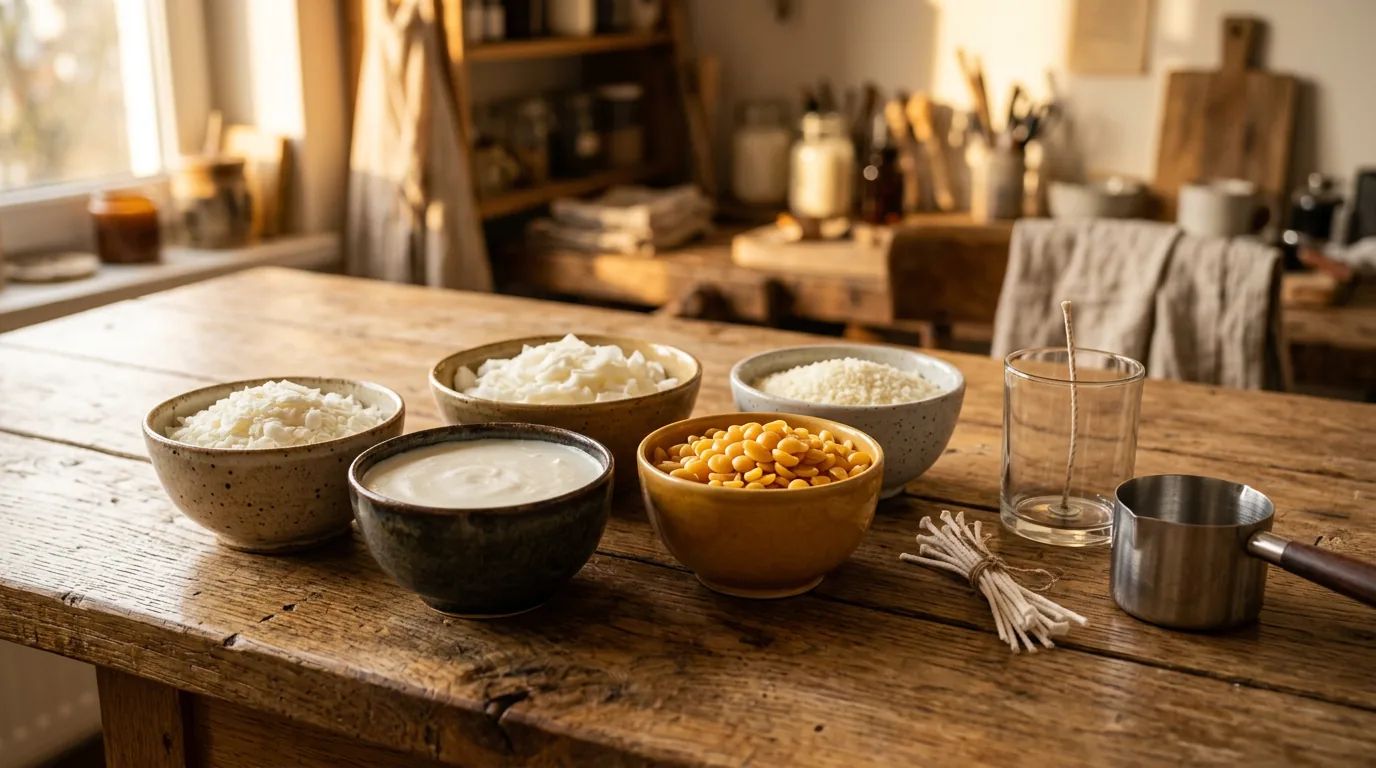
For home production, ease of use is also important. There are types that forgive small mistakes during pouring or cooling, and then there are those that require more precise temperatures, better testing, and greater patience. So if you’re just starting out, it’s perfectly fine to look for a wax that is user-friendly. Home crafting should be a joy, not an endless battle with materials.
Soy wax: the most popular choice for beginners
Soy wax is by far the most common choice for hobby candle making today, and for good reason. It looks natural, is popular with those who prefer plant-based materials, and is particularly well suited for container candles. It burns more slowly than many other waxes, tends to look gentle, and creates a beautifully cosy impression. If you want to make candles that feel delicate, clean, and natural, it’s a very good place to start.
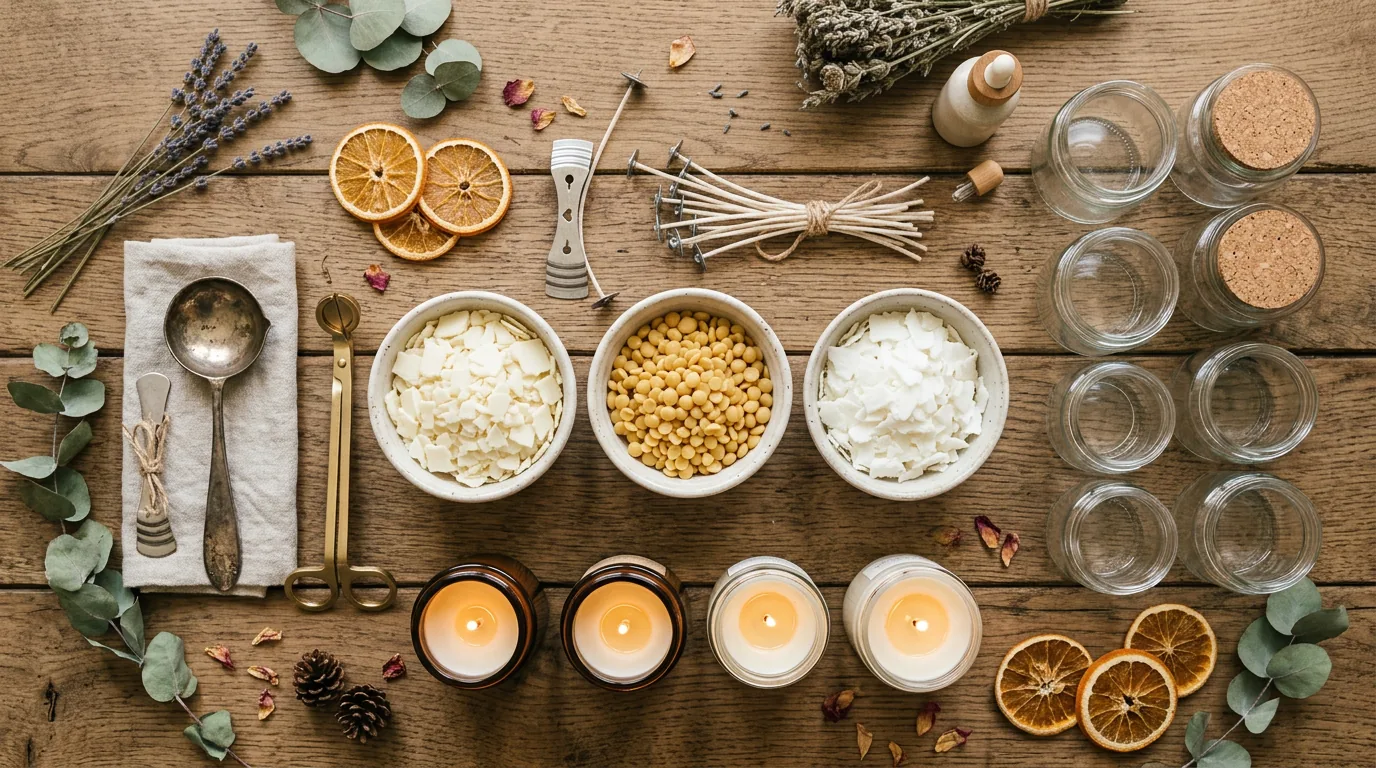
It’s fair to mention, though, that soy wax has its own specific characteristics. It can produce frosting – a fine white patterning or crystalline effect on the surface or the glass. This isn’t a defect but the wax’s natural behaviour. With homemade candles, it’s perfectly normal and many makers see it more as proof of the wax’s natural character than as a problem. Soy wax also often needs a longer cure time for the fragrance to develop beautifully. That makes it ideal for those who can give their candle time.
For beginners, the best option is usually soy wax specifically designed for containers. This is important to mention because there are also harder types better suited for moulds. If you choose the right type, you’ll have a material from which you can learn a great deal and which is versatile enough for your first experiments with fragrances and wicks.
Coconut wax: luxurious appearance and gentle performance
Coconut wax is often perceived as a more elegant, premium choice. It tends to have a very smooth, creamy surface, and candles made from it often look exceptionally clean and sophisticated. If you’re drawn to a delicate, luxurious impression and want to make candles that look truly polished in an interior, coconut wax is worth considering. Many brands use it either on its own or blended with other plant-based waxes.
Its great advantage is pleasant fragrance performance and a beautiful finish after setting. On the other hand, it can be more expensive and isn’t always as easy to start with as soy. Some coconut blends are softer and you need to match the wick, fragrance, and vessel more carefully. For home crafting, it’s excellent if you already have at least basic experience and want to take your candles a step further.
Coconut wax is often a favourite among those who want to make candles as gifts or are thinking about starting a small brand. It produces a very attractive “visual result” and the finished product looks premium, even when the design is perfectly simple.
Beeswax: a natural classic with distinctive character
Beeswax holds a special place in the candle world. It is traditional, natural, and has its own unique charm. It has a gentle honey scent all on its own and creates a warm, golden impression. Many women love it precisely because it feels genuine, homely, and very authentic. It’s ideal for those who appreciate natural materials and simple beauty without excessive styling.
On the other hand, beeswax isn’t the easiest choice for classic scented candles in glass. It is harder, denser, and has its own natural aroma that may not suit all fragrance oils. It is therefore often used for natural candles without heavy fragrance additions or for specific recipes. If you’re drawn to a purely natural direction and want candles as a cosy addition to your home, beeswax can be a lovely path.
Price also plays a big role here. It tends to be higher than for common hobby waxes, so it’s better suited to more considered production than large test batches. Still, it has its magic, and for some makers, it is the very heart of all their home crafting.
Paraffin: easy, stable, and still widely used
Paraffin sometimes has an unfairly bad reputation because part of the hobby community automatically pushes it aside. In reality, it is a material with many practical advantages. It holds colour very well, tends to be stable, is easy to work with, and often carries fragrance superbly. If your goal is to create visually perfect candles with a strong scent throw, paraffin can deliver very reliable performance.
It’s true that many home crafters today naturally reach for plant-based options because they feel closer to their philosophy or brand style. That is completely legitimate. At the same time, there is no need to dismiss paraffin automatically without proper knowledge. For certain types of candles, especially decorative or heavily fragranced ones, it can still be a very functional choice.
If you make candles mainly for the joy of it at home and want a natural, gentle, and cosy character, you’ll probably be more drawn to soy or coconut. But if you ever wanted to test different styles and compare the performance of individual waxes, paraffin can be an interesting reference point.
Wax blends: a practical compromise
Various blends – mixtures of waxes – are also very popular. They often combine the best of several worlds: for example, the more natural appearance of a plant-based wax with the better technical properties of another component. You may come across soy and coconut blends, soy and paraffin blends, or ready-made formulations from manufacturers designed specifically for containers, moulds, or stronger scent throw.
For home crafters, blends have one great advantage: they can be more stable and predictable. If you’re drawn to a natural look but don’t want to deal too much with frosting or a soft surface, a quality blend can be an excellent solution. At the same time, it’s worth remembering that each blend behaves slightly differently, so the golden rule of candle making applies here too: test, record, and don’t rush.
How to choose wax by candle type
When choosing, a simple question helps enormously: what do you actually want to make?
For container candles, the safest and most popular options tend to be:
- Soy wax for containers.
- Coconut wax or coconut blends.
- Gentle plant-based blends designed for container candles.
For moulded candles, more suitable options tend to be:
- Harder paraffin blends.
- Special mould waxes.
- Some harder natural blends.
For a natural, rustic style, lovely choices include:
- Beeswax.
- Soy wax with a gentler fragrance load.
- Natural blends without overly bold colourants.
What to look for when buying for the first time
When choosing your first wax, there’s no need to buy five different types at once. In fact, it pays to pick one tried-and-tested type, ideally designed specifically for the purpose you have in mind. Look mainly at:
- Whether the wax is suitable for containers or moulds.
- Its recommended melting, fragrance, and pouring temperatures.
- Its recommended fragrance load, for example 6% to 10%.
- Whether the manufacturer provides wick recommendations.
- What experiences other makers have had with it.
Rather than experimenting widely at the start, it’s better to build confidence with one material. Once you understand how it behaves during pouring, setting, and burning, comparing other options will be much easier for you.
Key takeaway
If I were to recommend the single most practical path for getting started, it would be quality soy wax for glass containers. It’s accessible, popular, aesthetically beautiful, and perfectly suited for home hobby crafting. When you later crave a more luxurious look, you can try coconut wax or a gentle blend. And if you’re drawn to a purely natural character, beeswax will offer an entirely different, very genuine atmosphere.
In the world of candles, there is no single right answer. There is only the wax that best suits your style, your patience, and the kind of candles you want to have on your table, in your bedroom, or as gifts for loved ones. And that is where the whole magic lies.