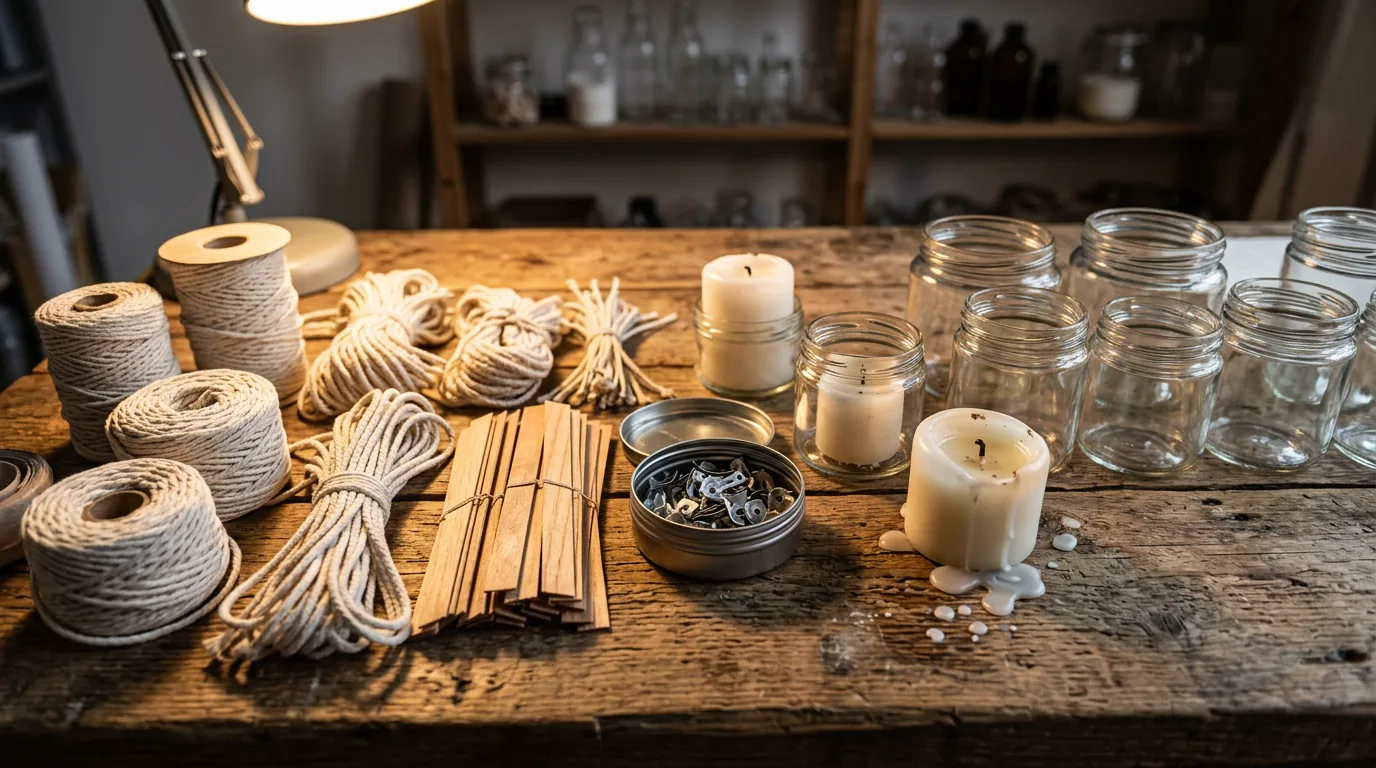
The wick is a small detail that may be almost invisible at first glance, but in reality, it has an enormous impact on the entire candle. It is the wick that determines flame size, wax melting speed, burn stability, and whether the candle smells beautiful or merely smoulders reluctantly. Many beginners focus mainly on the wax and fragrance, but a poorly chosen wick is very often the reason a candle doesn’t perform as it should.
If your candle tunnels, the flame is weak, the wax doesn’t melt to the edges, or conversely the glass blackens and the wick produces soot, the problem most likely lies right here. Wick selection isn’t complicated merely because several types exist. It’s complicated mainly because a wick never works in isolation. It always reacts to the specific wax, specific fragrance, specific vessel, and sometimes even the colourant. That’s why choosing is more about finding the right combination than making a one-off decision.
What the wick actually does in a candle
Many people imagine that the wick simply burns. In reality, it functions as an intermediary between the flame and the wax. It absorbs melted wax and channels it to the flame, where the wax gradually becomes fuel. So the wick is not the main “burning material” but a tool that helps the candle function properly.

When the wick is well chosen, the flame is calm and stable, the wax melts evenly, and the candle creates a pleasant pool without excessive smoke. When the wick is wrong, the imbalance shows very quickly. Either the flame is weak and insufficient, or too aggressive. In both cases, you lose quality and the joy of the finished product.
Why candles tunnel
Tunnelling is among the most common problems in home candle making. You recognise it when the candle burns mainly down the centre and a layer of untouched wax remains along the vessel walls. The result doesn’t look nice, and a large portion of the wax is never used. The candle then gives the impression that it doesn’t work as it should.
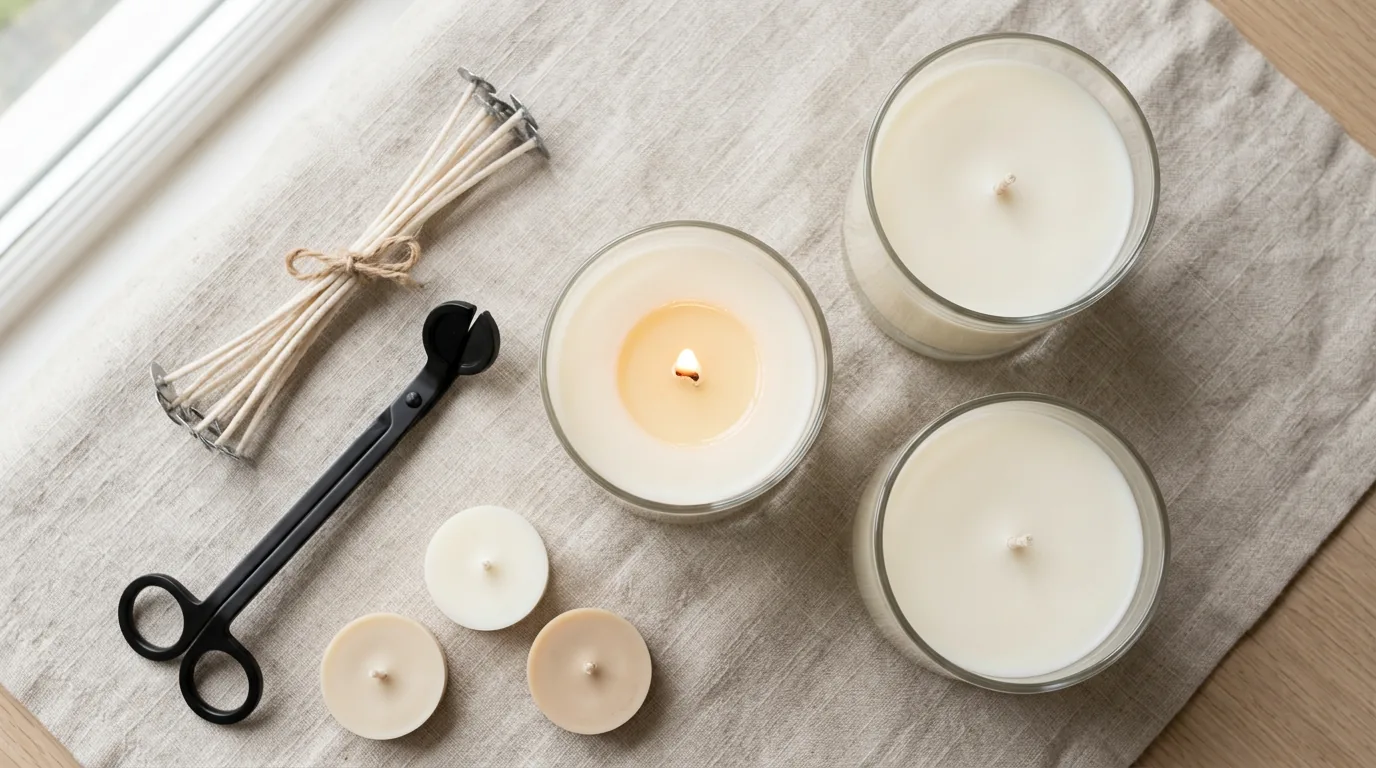
The most frequent cause is a wick that is too small for the diameter of the vessel or the specific type of wax. In some cases, the fact that the candle wasn’t allowed to burn long enough during its first lighting also plays a role. With candles, the first burn creates a kind of surface memory. If the wax doesn’t melt almost to the edges, subsequent burns tend to follow the same smaller circle.
That’s why it’s so important not only to choose the right wick but also to educate the candle user about the first burn. In home production, it’s ideal to keep this in mind from the very start.
Why soot and an overly high flame occur
The second common issue is soot, smoking, or an excessively high flame. In this case, the wick is usually too large or too long. It may also be reacting with heavily fragranced wax or a heavier recipe that promotes stronger burning. An overly high flame is not just an aesthetic problem. It also means higher temperature, faster wax consumption, blackening of the vessel rim, and in extreme cases, even a safety risk.
That’s why it’s important to trim the wick regularly. Before each lighting, a length of approximately 0,5 cm is recommended. This small detail has a huge effect on burn quality. Many people underestimate just how much the wick length influences the overall impression of the candle.
Key factors when choosing a wick
When selecting a wick, you need to consider several things at once:
- Vessel diameter.
- Type of wax.
- Amount and type of fragrance.
- Any use of colourant.
- Desired burning style.
The wider the vessel, the greater the output the wick usually needs. But the wax also comes into play. For example, soy wax doesn’t behave the same as paraffin or a coconut blend. And fragrance? That can influence flame behaviour too, especially if there is a lot of it or it’s composed of heavier notes. That’s why two identical wicks may not perform the same in different candles, even if the vessel looks the same at first glance.
Cotton wicks: a classic that makes sense
For most beginners, cotton wicks are the most natural choice. They’re widespread, easy to work with, and there are many recommendations for them from wax and vessel manufacturers. They look unobtrusive and are usually very good for learning the basics of testing.
Their great advantage is predictability. When you’re working with a familiar combination of wax and vessel, it tends to be simpler to find the right size. Cotton wicks also fit well into most candle styles, from simple homemade pieces to more elegant gift candles.
Wooden wicks: beautiful effect but more sensitive tuning
Wooden wicks are very popular for their appearance and the gentle crackling reminiscent of a miniature fireplace. A candle with a wooden wick looks more luxurious, more design-led, and often catches the eye at first glance. For gift or premium-style candles, they have great charm.
At the same time, they tend to be more sensitive to correct setup. Not every wax suits them equally well, and sometimes they require more testing. They can be prone to going out if the width, thickness, or recipe isn’t well matched. That doesn’t mean they’re unsuitable. It’s just worth expecting that the path to an ideal result may be a bit longer than with classic cotton options.
How to tell if the wick is right
A well-chosen wick can be recognised by several signs. The flame is stable, doesn’t flicker unnecessarily, and is neither too small nor excessively tall. The wax gradually melts to the edges of the vessel without forming a deep tunnel. The candle doesn’t smoke, doesn’t leave noticeable soot, and the vessel doesn’t overheat. The hot throw – the scent while burning – is pleasant and natural.
The ideal candle is always about balance. It’s not about making the flame as large as possible, but about having the right output. In homemade candles, this balance is often the best sign of a well-tuned product.
Why a burn test is indispensable when choosing a wick
A wick cannot be chosen by feel or a universal recommendation alone. It always needs to be tested. That means letting the candle cure, lighting it, and observing how it behaves over several burn cycles. It’s important to watch the flame size, melting speed, soot production, and vessel temperature. Often a candle looks fine in the first hour but after a longer time reveals that the wick is a bit too strong or, conversely, too weak.
It’s precisely the burn test that allows you to fine-tune the details. Sometimes a shift of just one wick size transforms a problematic candle into an excellent one. And that’s why experienced makers treat testing as a normal part of production, not an annoying chore.
Practical tips for beginners
If you’re just getting started with wicks, a few simple rules will help:
- Follow the wax manufacturer’s recommendations.
- Use the same vessel for your first tests.
- Don’t change the wax, fragrance, and wick all at once.
- Write down which combination worked best.
- Trim the wick before each lighting.
The simpler and more systematic your start, the faster you’ll understand what your candles need. Jumping unnecessarily between lots of materials only leads to chaos.
Key takeaway
The wick is small but crucial. It very often determines whether a candle will look amateurish or truly beautiful and professional. The end of tunnelling and soot doesn’t begin with a more expensive fragrance or a prettier jar, but with the right wick and honest testing. Once you understand that, you’ll take an enormous step forward in home candle making.